
Overlap with Brain Injury
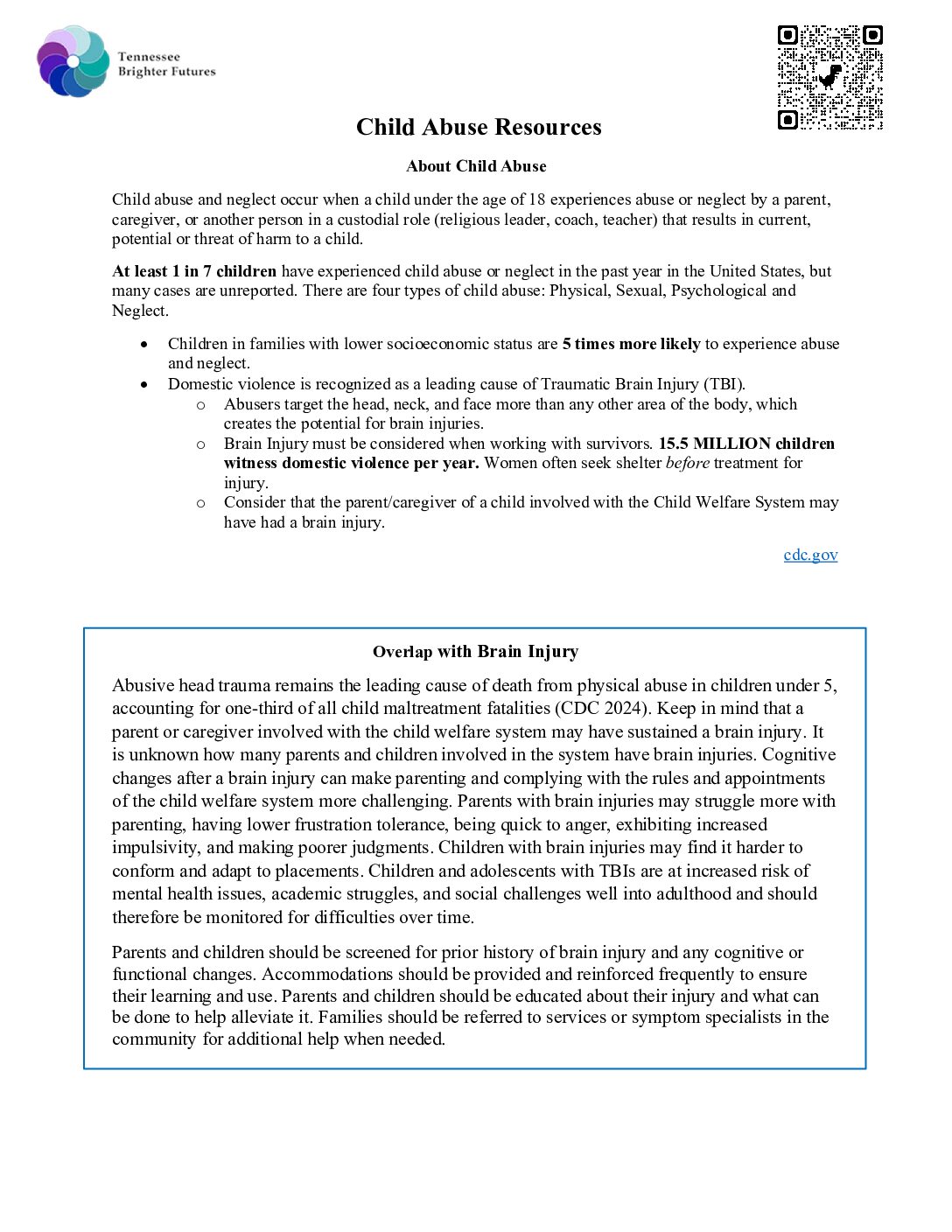
Abusive head trauma remains the leading cause of death from physical abuse in children under 5, accounting for one-third of all child maltreatment fatalities (CDC 2024). Keep in mind that a parent or caregiver involved with the child welfare system may have sustained a brain injury. It is unknown how many parents and children involved in the system have brain injuries. Cognitive changes after a brain injury can make parenting and complying with the rules and appointments of the child welfare system more challenging. Parents with brain injuries may struggle more with parenting, having lower frustration tolerance, being quick to anger, exhibiting increased impulsivity, and making poorer judgments. Children with brain injuries may find it harder to conform and adapt to placements. Children and adolescents with TBIs are at increased risk of mental health issues, academic struggles, and social challenges well into adulthood and should therefore be monitored for difficulties over time.
Parents and children should be screened for prior history of brain injury and any cognitive or functional changes. Accommodations should be provided and reinforced frequently to ensure their learning and use. Parents and children should be educated about their injury and what can be done to help alleviate it. Families should be referred to services or symptom specialists in the community for additional help when needed.
Children from early childhood through adolescence and young adulthood, especially, should be monitored over time for challenges with academics, cognition, physical ability, mental health and behavior. Their medical and academic charts should contain a designated form to indicate their history of brain injury, including concussion, so the knowledge is not lost when they transition from one teacher to another or one school to another, including transitions from early childhood settings. See Concussion/TBI Alert and Monitoring Form. The research showing differences in children with and without brain injury several years later highlights the importance of this tracking.

 Infographic
  Video
Video 
 PowerPoint
 Document
  Article


System of Care
TN Brighter Futures groups that are a part of this System of Care:
- Tennessee Early Intervention System
- Department of Children’s Services
- UTK Social Work Office of Research & Public Services
- Tennessee Voices
- Children’s Advocacy Center of Tennessee
- Tennessee Department of Health CHANT Program
- Giles County Early Interventionist
- ETSU Center for Excellence for Children in State Custody
- Carl Perkins Center
September 2025