
2026 Policy Priorities
During the 2026 legislative session, the Tennessee Disability Coalition (TDC) worked with partners and lawmakers to support policies that could improve the lives of people with disabilities.
Our 2026 policy priorities focused on three main areas: paid family caregiving, education, and access to care. We worked with advocates, community partners, and policymakers to better understand these issues and develop ideas for future laws.
We tracked more than 100 bills that could affect Tennesseans with disabilities, and this work has helped prepare us for future legislative sessions.

Paid Family Caregiving
Tennessee families need more ways to be paid and supported when they provide necessary care to a loved one with a disability. TDC continues to support a comprehensive statewide approach to paid family caregiving.
What happened in 2026?
- The legislature did not create a comprehensive paid family caregiving program this year.
- Lawmakers passed SB 1777/HB 1443, creating a Family Caregiver Grant Fund with the Department of Disability and Aging (DDA).
- The program is limited and received a one-time funding of the program.
- State policies affecting paid family caregiving are still changing.
What does this mean?
Tennessee took a small step toward supporting family caregivers, but families do not have the broad statewide paid family caregiving TDC is still seeking.
What can you do to help?
In 2027, Tennessee still has more work to do. Our state needs a clear statewide program to help pay family members who care for loved ones with disabilities. You can help by sharing your story with your lawmakers. Tell them what is working, what is not working, and what Tennessee could do better to support paid family caregivers.
TDC’s Assessment of Paid Family Caregiving in 2026: Some progress has been made. More work is needed.
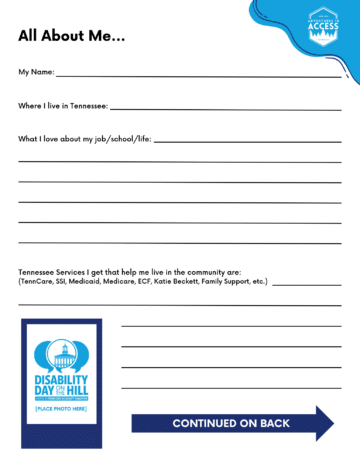
Use the following resources to learn more about the Freedom for Family Care Act and fill out a ‘Leave-Behind’ to share your story about paid family caregiving to send to your representatives.
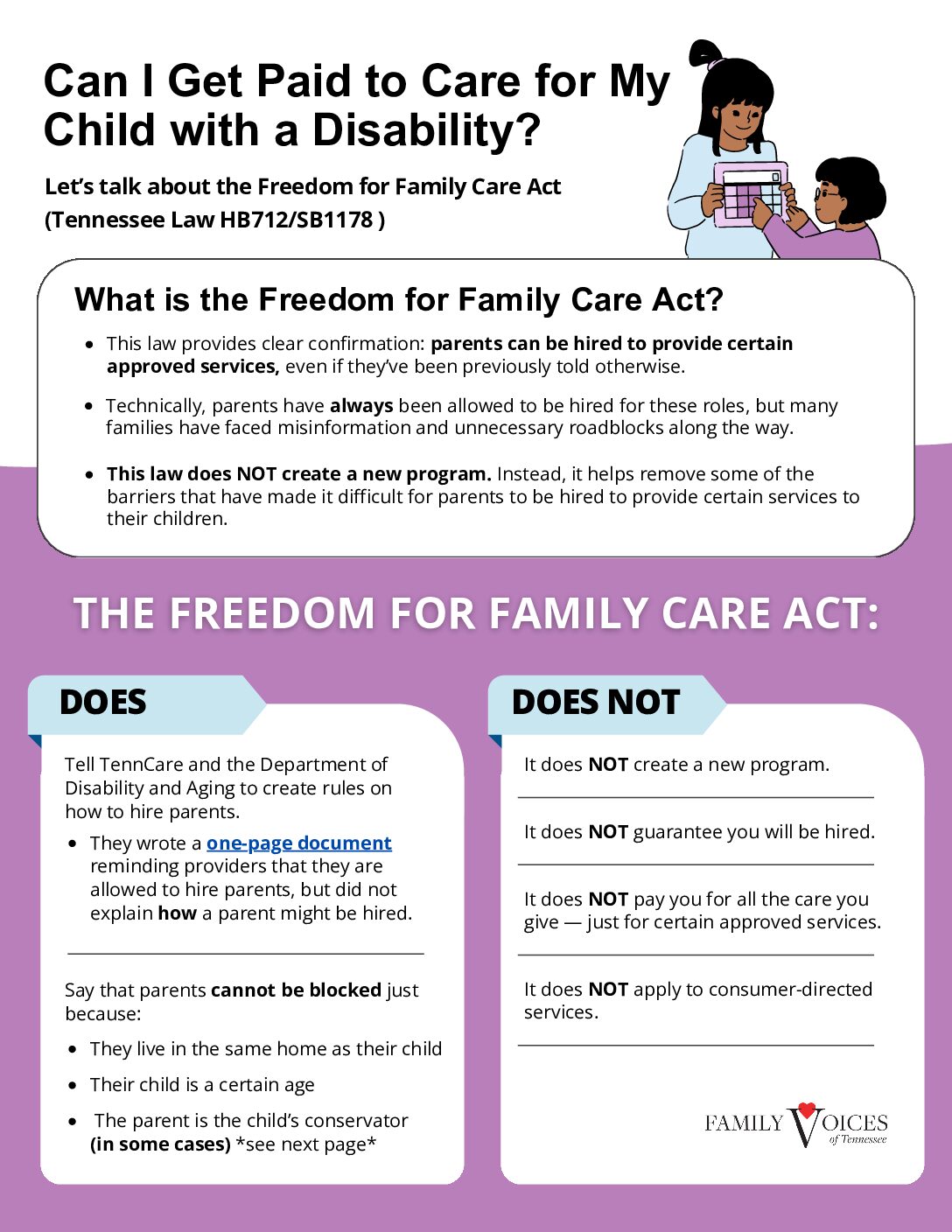
 Document

Education
Students with disabilities should receive strong special education services no matter where they live or what school they attend. Tennessee must give schools clear guidance and resources while holding them accountable for protecting students’ rights.
What happened in 2026?
- Tennessee continued making significant changes to education policy.
- SB 2228/HB 2533 made several education changes, including changes involving Individualized Education Accounts (IEA).
- SB 2055/HB 2327 allows certain privately paid providers to provide services to eligible services to students with autism or developmental delays during the school day.
- TDC continued watching broader changes to public education funding and school vouchers (Education Freedom Scholarship or EFS) because most students with disabilities attend public schools.
-
Tennessee Senate Majority Leader Jack Johnson introduced SJR 650. This resolution supported closing the U.S. Department of Education and giving states more control over education. It also called for a task force to make a plan for Tennessee to take over federal education programs.
A resolution is not a law, but it does show the position of the Tennessee General Assembly.
What does this mean?
Some families may have new choices for schools and services, but there are still big questions about funding, school responsibility, and whether students with disabilities get the same support and services across Tennessee.
What can you do to help?
In 2027, Tennessee still has more work to do in education. Tennessee must give schools clear rules, enough resources, and strong support. The state must also hold schools accountable when they do not follow the law or provide students with disabilities the services they need. Every student deserves the support they need to learn and succeed.
We urge families and advocates to speak with school administrators and elected officials about how we can make sure everyone follows the law, while giving every Tennessee student an opportunity to learn, and to make a life.
TDC’s Assessment of Education: Mixed. More improvement is needed.
Use the resource below to share your story about education with your legislators.


Access to Care
Tennesseans with disabilities need healthcare and community services that are available, affordable, and easy to access. TennCare and Medicaid are especially important for people who rely on long-term services and supports. The purpose of Medicaid and TennCare for Tennesseans with disabilities is access to healthcare and services in the community.
People with disabilities have higher than average health care needs that can’t be met by private insurance. Medicaid/TennCare is our lifeline. It is getting harder to get and maintain this lifeline.
What happened in 2026?
- Tennessee provided $85 million in new state and federal funding for ECF CHOICES.
- 2,500 people are expected to receive services from waiting list.
- 300 crisis placements are expected to receive support.
- $31 million has been provided to expand CHOICES group 3. CHOICES group 3 is a TennCare long-term program tier for adults age 21 and older with a disability and adults age 65 and older.
- 2,000 more adults are expected to receive CHOICES group 3 services
What does this mean for you?
Thousands more Tennesseans may be able to receive home- and community-based services (HCBS). TDC will continue watching whether the funding actually results in timely, accessible services.
What can you do to help?
Tennessee’s Rural Health Transformation Program will receive more than $1 billion in federal funding from 2026 through 2030. The funding comes from a federal law passed by Congress in 2025.
For people with disabilities, this funding could improve transportation to medical care, mobile health services, help finding and using services, and telehealth.
However, the program does not clearly explain how it will meet the needs of people with disabilities. Tennessee must set clear rules and track results. Without these steps, services may grow while people with disabilities still face the same barriers to getting care.
Do you live in rural Tennessee? How could this program improve access to care for you? Reach out to your policymakers to advocate for the Rural Health Transformation Program to work for Tennesseans with disabilities.
TDC’s Assessment of Accessing Care: Important progress has been made in funding. We will need to watch how the funding is put in place to improve access to programs and services.
Use the resource below to share your story with your legislators.

Additional Policy & Advocacy Resources


Get Breaking Disability Policy Updates in Tennessee
Join our email list to stay connected and engaged in disability policy all year long!