
All Brain Injury Resources
 Link
Link
Brainline: Resources about brain injury and PTSD
Link
Center on Brain Injury Research and Training (cbirt)

 Document
Strategies for Moving Forward Together: Return to School Series Resources
Impact of the Pandemic on Families
Intersections of Mental Health and Suicide
Building Resiliency through Brain Health
Putting the Pieces Together: Panel and Q&A
 Article
Brain Links Webinars and Training Resources
Article
2024 Brain Links Training Series

Document
2025 Brain Links’ Webinar Training Series
People with brain injury often seek treatment for multiple co-occurring needs, like substance use disorder, mental health, domestic violence and/or chronic pain. The brain injury must be properly identified, and symptoms must be accommodated to enable the person to fully benefit from support programs in these and other areas.
Each session in this series will use case studies with different levels of injury, individual challenges and interactions with systems. We will also show how to apply existing tools when working to support the individual.
Document
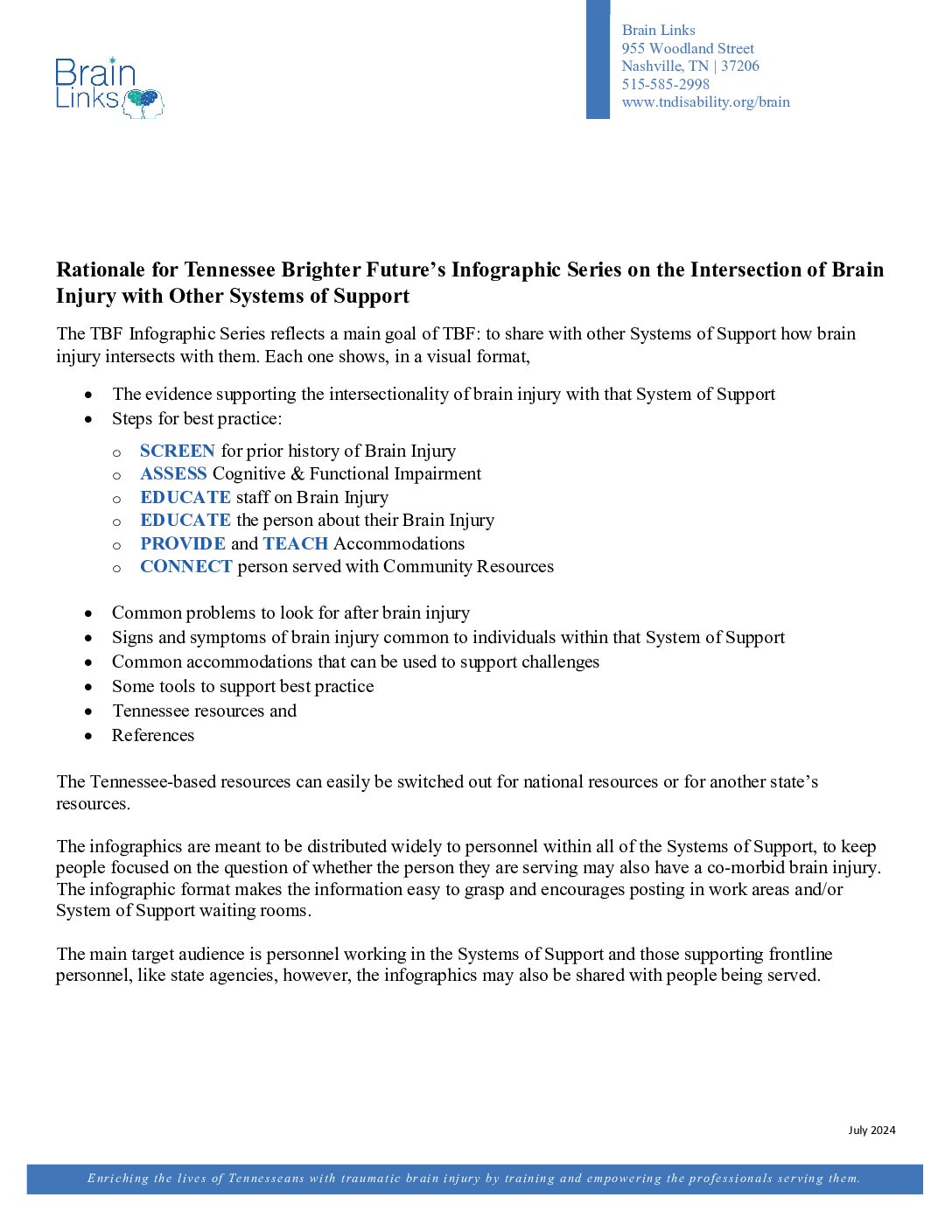
Rationale for Tennessee Brighter Future’s Infographic Series on the Intersection of Brain Injury with Other Systems of Support

Document
Substance Use Disorder Resources
Intersectionality with Brain Injury:
After brain injury, 70-80% are discharged from healthcare facilities with a prescription for opioids.
People with traumatic brain injury are ten times more likely to die of accidental overdose, in larger part because of cognitive and behavioral changes.
Within 8-12 months after injury, 10-20% will develop a substance use problem and that number will grow over time.
Approximately half of people receiving substance use treatment have at least one brain injury.
As high as 75% of people seeking both mental health and substance use treatment also have a brain injury.
Twenty-five percent of people entering brain injury rehabilitation are there as a result of drugs or alcohol and being intoxicated at the time of injury makes it harder for the brain to heal.
Those with childhood TBI are more likely to use drugs and alcohol as adults.
For every overdose death, there are approximately fifty overdose survivors, 90% of whom become impaired because of insufficient oxygen to the brain.

 PowerPoint
Substance Use Resources
PowerPoint slides from a presentation on substance use resources, delivered by Matt Yancey, Deputy Commissioner of TDMHSAS; Taryn Sloss, Assistant Commissioner for the Division of Substance Abuse Services at TDMHSAS; Jessica Youngblom, Director of Strategic Initiatives at TDMHSAS; Renea Bentley, Executive Director of Behavioral Health at Amerigroup; Elizabeth Haren, Director of Substance Use Disorder Services at UnitedHealthcare; and Rhonda Roper, Clinical Director of Behavioral Health Services at BlueCross BlueShield of Tennessee, on September 7, 2023.

 Infographic
Brain Injury & Substance Use Disorder
BEST PRACTICE: Substance Use treatment centers should:
SCREEN for prior history of Brain Injury
ASSESS Cognitive & Functional Impairment
EDUCATE staff on Brain Injury
EDUCATE the person about their Brain Injury
PROVIDE and TEACH Accommodations
CONNECT person served with Community Resources
 Video
Video
Recording_TBF: Substance Use
September 7, 2023, Presenters:
Matt Yancey Deputy Commissioner TDMHSAS
Taryn Sloss Assistant Commissioner for TDMHSAS Division of Substance Abuse Services
Jessica Youngblom TDMHSAS Director of Strategic Initiatives
Renea Bentley Executive Director of Behavioral Health, Amerigroup
Elizabeth Haren Director, Substance Use Disorder Services, UnitedHealthcare
Rhonda Roper Clinical Director Behavioral Health Services at BlueCross BlueShield of Tennessee
Article
Substance Use Disorder Resources and Screening Tools
A curated set of screening, assessment, and crisis intervention tools to help identify needs and connect individuals to appropriate support.
Get Breaking Disability Policy Updates in Tennessee
Join our email list to stay connected and engaged in disability policy all year long!