
What is the Community Integration Mandate?
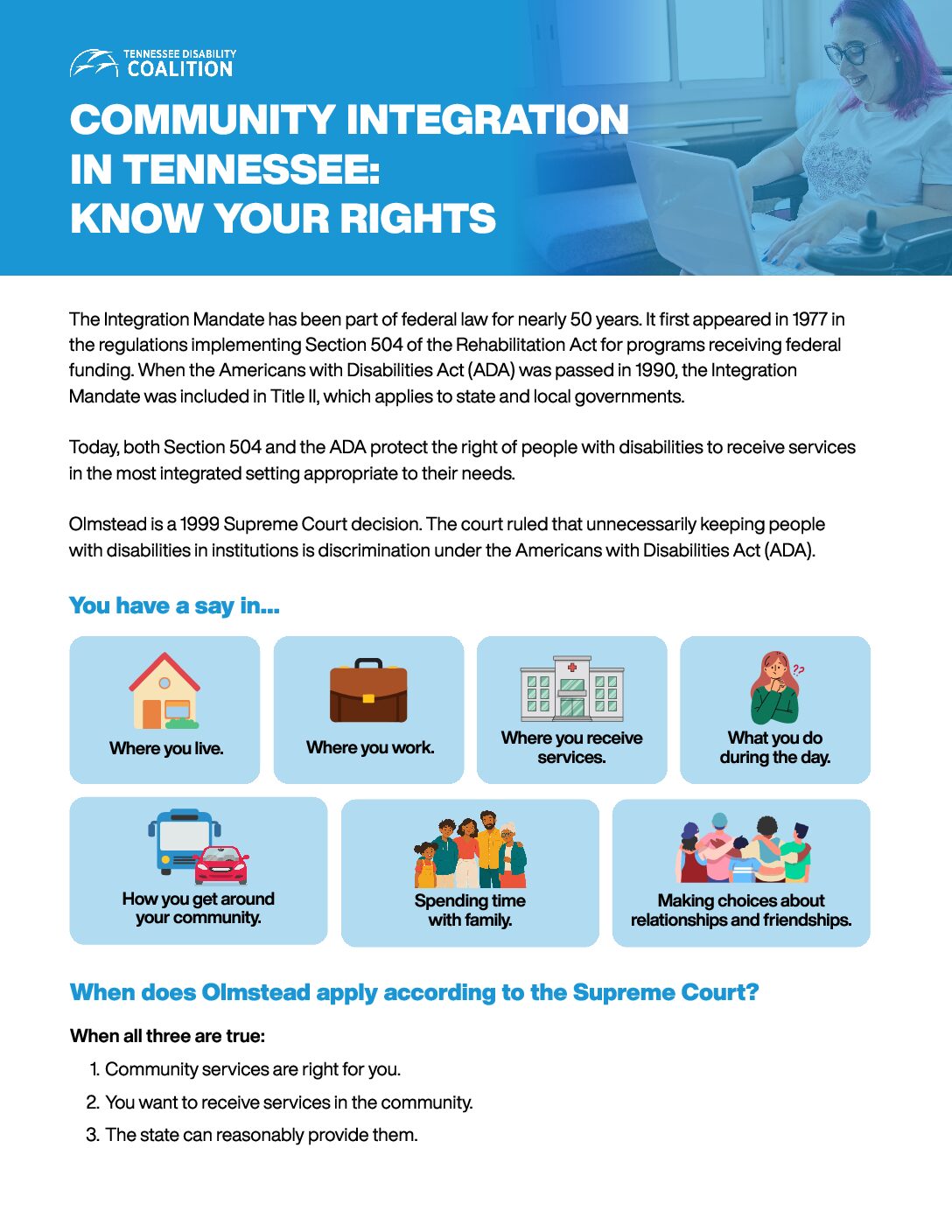
The Integration Mandate has been part of federal law for nearly 50 years. It first appeared in 1977 in the regulations implementing Section 504 of the Rehabilitation Act for programs receiving federal funding. When the Americans with Disabilities Act (ADA) was passed in 1990, the Integration Mandate was included in Title II, which applies to state and local governments.
Today, both Section 504 and the ADA protect the right of people with disabilities to receive services in the most integrated setting appropriate to their needs.
Olmstead vs. L.C. is a 1999 Supreme Court decision. The court ruled that unnecessarily keeping people with disabilities in institutions is discrimination under the Americans with Disabilities Act (ADA).
Example: A person with a disability may need help with meals, bathing, or getting around. If those supports can be provided safely at home, the person should not have to move into an institution just to get the help they need.
Most people want to receive services in their own homes and communities. People with disabilities should have the choice and support to live in their communities.
New Federal Interpretation
On June 18, 2026, the U.S. Department of Justice (DOJ) released an Olmstead interpretation memo about our right to live in our communities. The DOJ stated it “will not rely upon the Olmstead Guidance in its enforcement of Title II of the ADA.”
The DOJ’s new interpretation does NOT erase the ADA, Section 504, or your right to challenge unnecessary institutionalization. If the federal government steps back from enforcing our rights, it’s up to the state of Tennessee to make sure our rights are enforced and protected under the law. Non-profit organizations and private agencies can also assist individuals who feel their right to be served in the community has been violated.
New House Resolution
The resolution says people with disabilities should not be forced to live in institutions when they can live in the community with the right support. It also supports home- and community-based services, jobs, education, and other services that help people live more independently.
This resolution does not create a new law. But it shows that members of both parties support protecting the right of people with disabilities to live and take part in their communities.
Take Action in Tennessee
Tell Tennessee leaders that people with disabilities should have the choice and support to live in their communities. You can help protect the right of people with disabilities to live and get services in their communities by:
- Finding your lawmakers. Learn who represents you in the Tennessee General Assembly.
- Sharing your story. Tell Tennessee leaders how community services help you or your family live, work, and take part in your community.
- Spreading awareness. Share information about Olmstead in your community.
- Staying connected. Follow the Tennessee Disability Coalition for updates and ways to take action.
 Document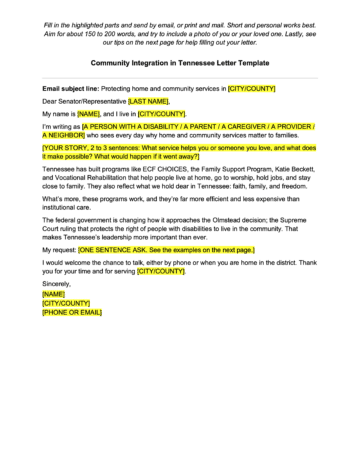
 Video
Video Additional Resources
- ADA: Community Integration
- Administration for Community Living (ACL)
- The Arc: the DOJ opinion explained.
- Disability Rights Tennessee: help understanding and defending your rights.
- Family Voices: Family Voices is a family-led organization that transforms systems of care to work better for all children and youth, especially those with special health care needs or disabilities. By putting families at the forefront and centering their leadership and lived expertise, we build a culture that includes everyone and fosters equitable outcomes.
- Family Voices TN Breaking Ground: 123 Housing: From Institutions to Community Living: A Brief History of Disability Housing
- Health and Human Services: Section 504
- National Council on Independent Living: Tell Congress to Defend Community Integration
- OlmsteadRights.org: plain-language information and self-advocacy tools.
- Tennessee Centers for Independent Living
Get Breaking Disability Policy Updates in Tennessee
Join our email list to stay connected and engaged in disability policy all year long!