
About Chronic Pain
How people manage their pain differs greatly, too. In addition to pain medication options, there are other types of treatment. For example, cognitive behavioral therapy (CBT) with a therapist that can help people to change their thoughts. Planning and pacing one’s activity is another non-medication tool to prevent and manage pain. https://msktc.org/tbi/tbi-topics/chronic-pain-tbi
ACUTE PAIN often results from disease, inflammation, or injury to tissues. It generally comes on suddenly.
CHRONIC PAIN is considered a disease itself (although it may result after injury or illness) and it can be influenced by environmental and psychological factors. It is resistant to most medical treatments. painconsortium.nih.gov
- For every 10,000 PEOPLE with severe pain, there is only ONE BOARD-CERTIFIED pain specialist.
- 20% of the adult population suffer chronic pain in the United States, with many experiencing more than one type of chronic pain.
- Chronic Pain is the leading cause of long-term disability in the United States.
- Chronic pain has biopsychosocial implications. It is associated with REDUCED QUALITY OF LIFE, including increased risk of anxiety and depression. uspainfoundation.org
Intersectionality With Brain Injury
The most common chronic medical condition that people with brain injury report is pain. Over half of people with Traumatic Brain Injury develop chronic pain. Many people have more frequent headaches following injury and they may require medication. People with brain injury are more likely to be prescribed opioids and are at eleven times greater risk of accidental overdose. Common problems following a brain injury, like poor judgment, memory and increased impulsivity, make it harder for them to self-regulate substance use and make an overdose more likely. Pain can make other brain injury symptoms seem worse. The brain injury can make it harder to use pain relief strategies (e.g. exercises, ice packs, meditation, and medication).
People in pain clinics should be screened for prior history of brain injury (especially if the pain resulted from a traumatic event), undergo cognitive screening, be given customized accommodations and referred to community resources as needed. People with TBI may have challenges with auditory comprehension; verbal and written language; reading; social communication; mental health (depression and anxiety) and/or behavior (including anger control issues). These issues may cause problems with understanding of and compliance with treatment.
 Article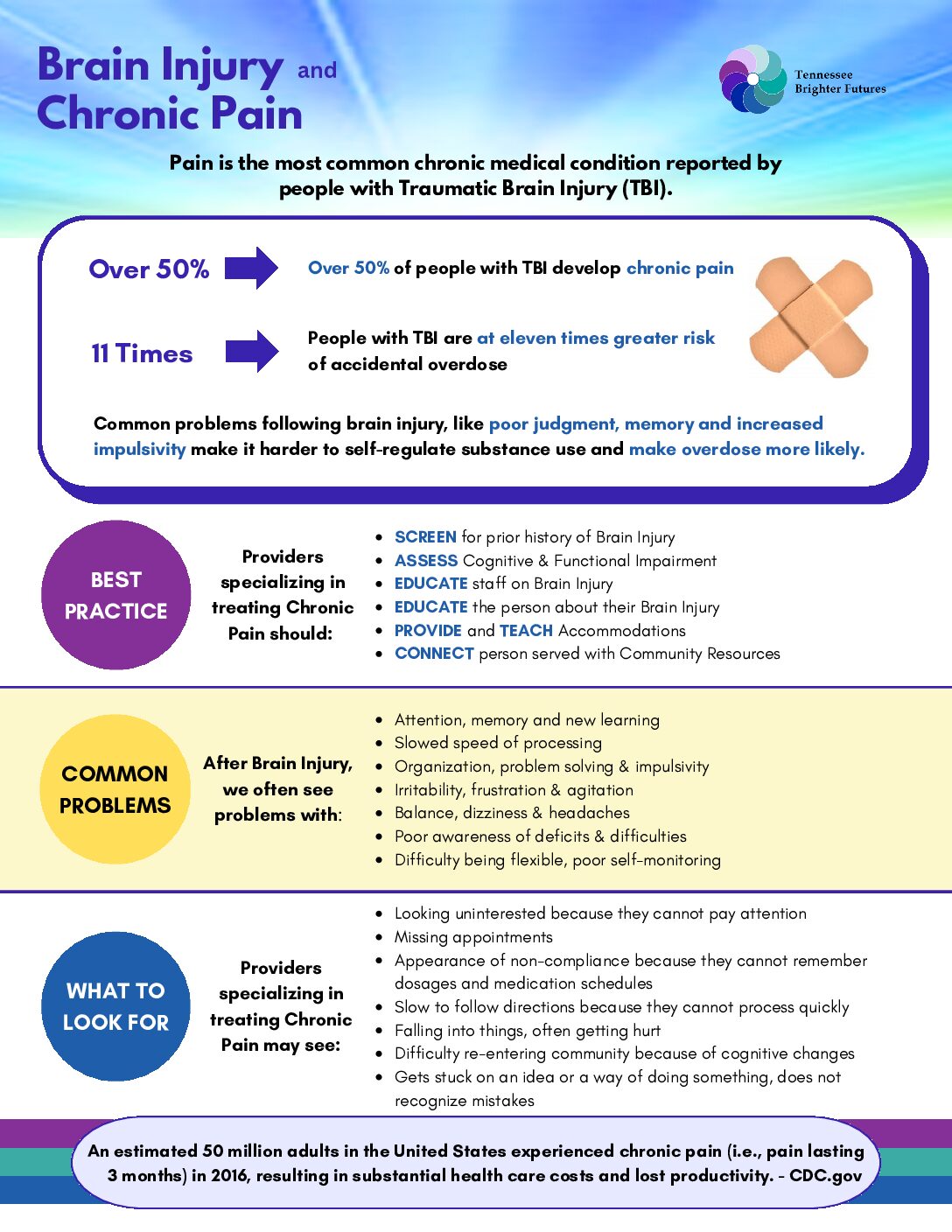
 Infographic
 Document
 System of Care
TN Brighter Futures groups that are a part of this System of Care:
- Tennessee Society of Interventional Pain Physicians
- Tennessee Pain Society
- Precision Pain Care